

Moving from classroom practice to long-term change
Promoting cultural diversity in early childhood education requires more than individual commitment — it calls for systemic and sustained action across all levels of practice. In Part 1, we explored practical ways that early childhood teachers can promote cultural diversity in their daily work with children. While strategies to promote cultural diversity are essential, there is potential for greater impact when they are supported by leadership, organisational culture, and community partnerships (Chua et al., 2023). This second part focuses on how sustained, system-wide change can support individual efforts.
Leadership, advocacy and organisational culture
The Queensland kindergarten learning guideline (QKLG) identifies that creating a culturally responsive environment begins within a collaborative leadership model.
Collaborative leadership and teamwork thrive in environments that encourage respectful communication, professional learning and quality improvement. Collaboration and teamwork optimise children’s learning, and teacher professional practice, through shared decision-making and action to support children, parents/ carers and families.
From this perspective, leadership involves creating environments that encourage participation, trust, and shared identity rather than merely providing direction (Tse & Mintz, 2025). Leadership teams set the tone for how cultural diversity is valued and embedded in practice. Leaders can:
- commit to culturally responsive practice in the service’s philosophy and quality improvement plan
- encourage regular professional development on diversity, equity, and inclusion and support learning to be shared across the team
- model inclusive language and behaviours in everyday interactions.
Early childhood teachers and educators can also lead the way in advocating for cultural diversity at a policy level. This might involve:
- contributing to consultations on curriculum and early learning frameworks
- sharing examples of best practice with professional associations-through blogs, articles and posts, e.g. Community Early Learning Australia, The Spoke, Every Child
- supporting policies that protect children from discrimination and promote equity in education.
By engaging in policy discussions and sharing real examples from practice, teachers and educators can help ensure that cultural diversity and inclusion are not just aspirations in policy documents but are actively implemented in early learning settings across Australia.
Partnering with families and local communities
Families and local communities hold a wealth of cultural knowledge. Services can strengthen children’s cultural learning by:
- collaborating with multicultural organisations, Indigenous elders, and community leaders
- organising excursions to cultural events and exhibitions
- inviting family and community members to share traditional music, dance, art, or storytelling.
These partnerships build stronger connections between early childhood settings and the diverse communities they serve.
Our recent study, Early Childhood Educators’ Pedagogical Knowledge for Effective Practice in Culturally and Linguistically Diverse Contexts (Veliz et al., 2025), found that while most educators reported feeling somewhat confident working with diverse communities, this confidence was often developed through hands-on experience rather than formal training. Many participants noted that their university or vocational studies did not adequately prepare them to meet the needs of children from differing cultural or linguistic backgrounds. Challenges such as limited time to engage with diverse cultures, unequal access to cultural resources, and a lack of diversity‑focused professional development opportunities for teachers and educators were also common. Despite these barriers, educators demonstrated resourcefulness — building strong relationships with families, drawing on children’s cultural knowledge, and adapting their teaching to be more inclusive. These findings point to a clear role for leadership in addressing training gaps and providing the time, resources, and support systems that enable teachers and educators to embed cultural diversity in everyday practice (Waniganayake et al., 2017).
Moving beyond ‘events-based’ approaches
While celebrating cultural events can be valuable, there is a risk of tokenism if this is the only way cultural diversity is addressed. A truly inclusive approach means embedding diverse perspectives into everyday routines, play experiences, and problem-solving activities (Australian Education Research Organisation, 2023). For example:
- incorporating diverse cultural perspectives into story time, science explorations, and dramatic play
- encouraging children to share their own experiences and traditions during group time
- valuing cultural differences in conflict resolution and communication styles
- encouraging the use and maintenance of home languages.
This approach shifts the focus on cultural diversity from being an occasional ‘special activity’ to a natural part of daily life. Collaborating with families to provide cultural resources creates opportunities for children to maintain their heritage language and culture.
In our recent project (Ba Akhlagh et al., 2024), we developed cultural resources using digital technology to foster the learning and development of refugee children and families, and support their transition to school. These resources included a story, a traditional game, a song, two traditional food recipes, and two numeracy and literacy activities covering numbers and the days of the week. Such resources not only enrich classroom learning but also create a shared space for cultural exchange, helping to build mutual respect and understanding across the whole learning community.
Promoting multiple ways of knowing and being
For many children, the ability to speak their home language is central to their identity. Supporting multilingualism not only fosters self-esteem but also benefits cognitive development. Teachers and educators can:
- learn greetings in children’s home languages
- invite families to share songs, rhymes, and stories in their language
- display bilingual/multilingual labels and signs around the classroom.
These practices signal to children and families that their language is valued and respected.
To successfully hold space for multiple ways of knowing and being, teachers and educators can adopt strategies that actively challenge dominant cultural norms. This involves recognising how mainstream practices often privilege certain worldviews, and consciously creating opportunities for alternative perspectives to be seen, heard, and valued. By doing so, educators can foster more inclusive learning environments where all children’s cultural identities are affirmed and celebrated. These might include:
- supporting bilingual/multilingual learning environments by inviting parents to teach educators and children the heritage language. The Ba Akhlagh & Matthews (2023) study, An analysis of parental involvement during Zoom-mediated heritage language instruction, found that parents’ active participation has a significant impact on maintaining heritage language
- engaging in assessment practices that value cultural knowledge, ensuring that all children’s strengths are recognised and celebrated
- advocating for inclusive policies at both service and state levels, so that multilingualism and cultural knowledge are not only encouraged but also embedded in systemic practices.
By combining everyday multilingual strategies with intentional approaches, early childhood settings promote quality inclusive practice that ensures all children equitably access, participate and engage in learning.
Providing culturally responsive curriculum resources
Authentic representation matters, and involves considering resources and materials that represent diverse cultures and are inclusive of all children. They have the right to see themselves positively reflected in their learning environment. Educators can audit their books, posters, and teaching materials to ensure they:
- reflect a variety of cultures, family structures, and abilities
- avoid stereotypes or oversimplified portrayals of cultural groups
- include resources created by authors and illustrators from culturally diverse backgrounds
- design free resources to support communities whose languages are at risk of diminishing.
Deepening reflective practices
Promoting cultural diversity is an ongoing journey that requires continuous reflection, helping teachers and educators move from surface-level understanding to deeper, transformative change. Teachers and educators can benefit from engaging in:
- professional learning communities that allow safe discussions about bias
- journaling or team reflection sessions to explore how personal beliefs influence practice
- anti-bias education to challenge assumptions and improve equity.
Conclusion
Promoting cultural diversity in early childhood education is not a one-off initiative — it is a sustained commitment. When educators, leaders, families, and communities work together, diversity becomes embedded in the service’s culture. In this way, early childhood settings can help shape a generation of children who not only recognise cultural diversity but also respect, value, and celebrate it.
Reflective questions
- How does my service’s philosophy and quality improvement plan reflect a genuine commitment to cultural diversity, and what changes might strengthen this commitment?
- In what ways do I, as an educator or leader, model inclusive language and behaviours that affirm diverse cultural identities within my team and community?
- What opportunities exist within my service or community to advocate for cultural diversity at a policy level, and how confident do I feel engaging in such advocacy?
- How can collaborative leadership and teamwork enhance our collective capacity to sustain culturally responsive practices over time?
This article is also available as a PDF.
Kindergarten research insights contributor
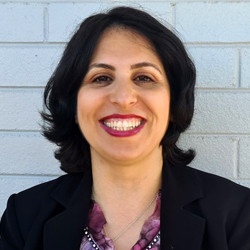
Dr Somayeh Ba Akhlagh
Dr Somayeh Ba Akhlagh is a senior lecturer at the University of New England as part of the Early Childhood Education team. She worked as an early childhood educator before moving into teaching early childhood courses and educational psychology in various universities both nationally and internationally. Somayeh’s research interests include inclusive education with a focus on cultural diversity.
References
Australian Education Research Organisation (AERO). (2023). Respect for diversity: Play‑based learning and intentionality. www.edresearch.edu.au/sites/default/files/2023-11/respect-for-diversity-pbl-aa.pdf
Ba Akhlagh, S. & Mehana, M. (2023). Welcome: Here are some Ezidi cultural resources for adults and children to enjoy together. University of New England. https://content.une.edu.au/2023/ec_hippy/welcome.html
Ba Akhlagh, S., Mehana, M., & Knaus, M. (2024). Supporting refugees participating in the Home Interaction Program for Parents and Youngsters in regional Australia. Journal of Ethnic and Cultural Studies, 11(4), 210–227. https://doi.org/10.29333/ejecs/2012
Ba Akhlagh, S. & Matthews, J. (2023, December 3–6). An analysis of parental involvement during Zoom-mediated heritage language instruction [Poster presentation]. Australasian Society for Computers in Learning in Tertiary Education Conference, Christchurch, New Zealand. https://doi.org/10.14742/apubs.2023.475
Board of Studies NSW. (2026). Making multicultural Australia. www.multiculturalaustralia.edu.au
Chua, S. W. Y., Sun, P. Y., & Sinha, P. (2023). Making sense of cultural diversity’s complexity: Addressing an emerging challenge for leadership. International Journal of Cross Cultural Management, 23(3), 635–659. https://doi.org/10.1177/14705958231214623
Queensland Curriculum and Assessment Authority. (2024). Queensland kindergarten learning guideline. www.qcaa.qld.edu.au/kindergarten/qklg
Tse, R., & Mintz, J. (2025). From compliance to cultivation: How principals’ values shape communities of practice for inclusion in market-driven kindergartens. Education Sciences, 15(12), 1607. https://doi.org/10.3390/educsci15121607
State of New South Wales (Department of Education). (2017). Using picture books for intercultural understanding. https://education.nsw.gov.au/content/dam/main-education/teaching-and-learning/curriculum/key-learning-areas/hsie/media/documents/geography-history-english-creative-arts-es1-s1-s2-s3-s4-s5-picture-books-intercultural-understanding.pdf
Veliz, L., Zhang, Z. & Ba Akhlagh, S. (2025). Early childhood educators’ pedagogical knowledge for effective practice in culturally and linguistically diverse contexts. Early Childhood Education Journal, 53, 2909–2919. https://doi.org/10.1007/s10643-025-01912-z
Waniganayake, M., Cheeseman, S., Fenech, M., Hadley, F., & Shepherd, W. (2017). Leadership: Contexts and complexities in early childhood education (2nd ed.). Melbourne, Australia: Oxford University Press.
- Last updated:
- 12 June 2026
